Whisker Fatigue in Cats: How Nerve Sensitivity Affects Eating
By Diego Álvarez • 24th Apr
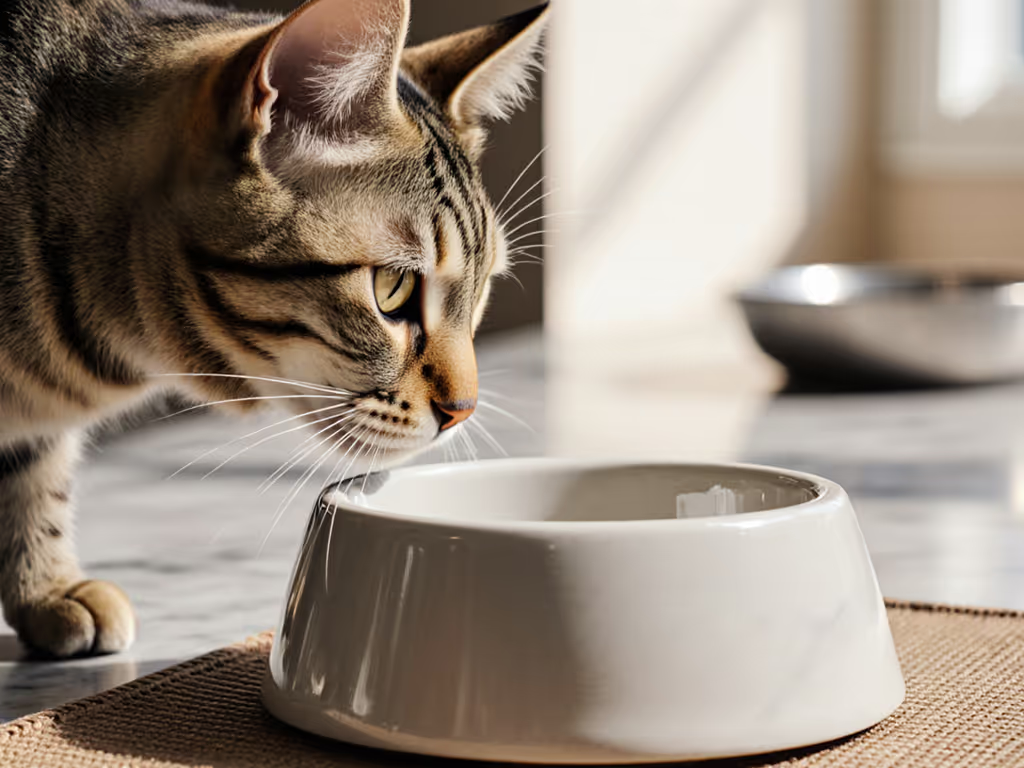
Your cat's whiskers are not decorative, they're finely tuned sensory organs embedded with nerve endings that transmit constant feedback to the brain.[1] Whisker fatigue in cats and feline whisker stress occur when these sensitive receptors become overwhelmed by prolonged contact with objects, most commonly during meals. The irony is that the bowl you selected to feed your cat may be the source of quiet, ongoing discomfort that shows up as avoidance, messiness, or behavioral shifts around food. For dimension guidelines and examples, see our whisker-friendly bowl shapes.
If your cat suddenly picks at meals, pulls food onto the floor, or acts hesitant at the bowl, the food bowl itself might be the culprit (not the food). Understanding this connection transforms how you design feeding routines and select gear.
The Hidden Mechanism: Why Whiskers Matter
Cat whiskers work through the feline facial sensitivity system. Each whisker is anchored at the base with a cluster of nerve endings called proprioceptors.[2] These don't just detect touch; they measure pressure, movement, and subtle changes in the air. Whiskers are part of a cat's autonomic (unconscious) nervous system, meaning they transmit information whether or not your cat consciously thinks about it.[2]
Think of it as continuous data streaming. Every time your cat's face enters a space, whiskers immediately start collecting information: Is there enough room? What's the texture? Is something moving? This constant transmission is by design, it helps cats navigate in low light, judge spatial relationships, and detect predatory threats.
But here's the problem: this same sensitivity can backfire at mealtimes.
The Problem: Whisker Sensory Overload at the Bowl
Whisker sensory overload happens when contact with the bowl sides becomes relentless.[1] Cats don't tire the way we do; instead, constant stimulation builds stress. Imagine wearing headphones that never come off, the pressure isn't painful at first, but hour after hour, it becomes irritating and then deeply uncomfortable.[6]
When a cat's whiskers brush against a deep or narrow bowl repeatedly, the nerve endings fire signals continuously. The cat's brain receives an overwhelming flood of positional data from a space that shouldn't require that much information.[3] Over time, the stress accumulates.
The worst culprits are:
- Deep, narrow bowls that force whiskers to touch the sides on every bite
- Small bowls that cramp the face and make every movement a collision
- High or steep bowl edges that require awkward angling, bending whiskers back
- Plastic bowls with ridged interiors or crevices that catch whiskers
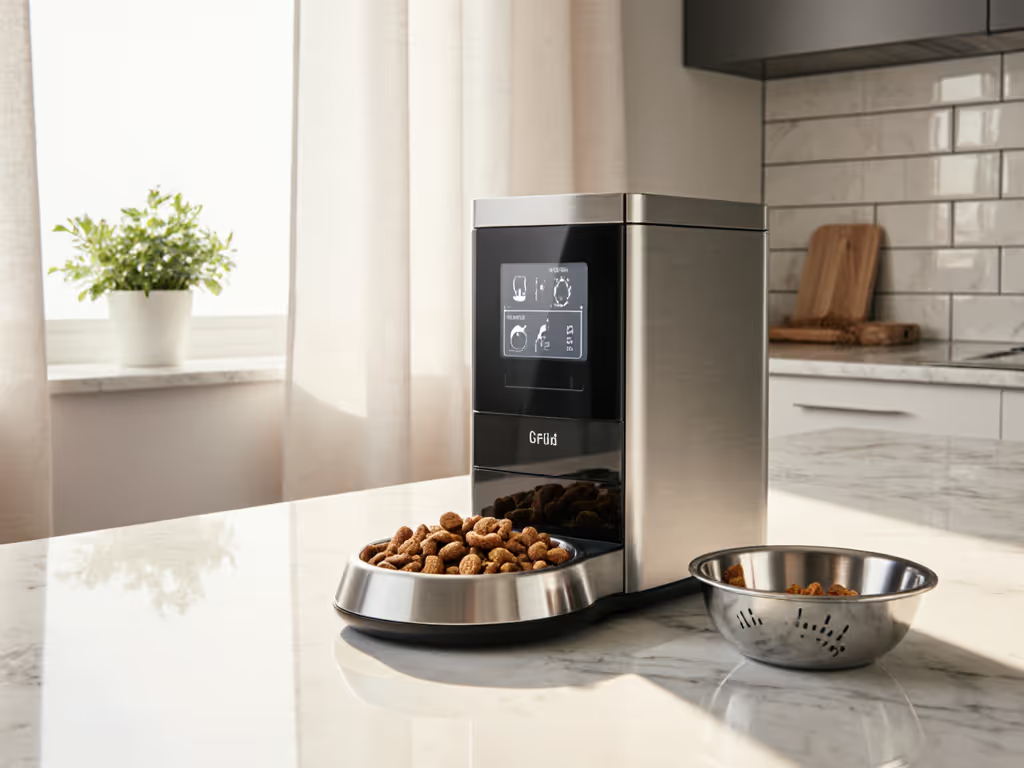
Water fountains and automatic feeders with tight-fitting lids can trigger the same response.[4]
How It Shows Up: Recognizing the Signs
Whisker fatigue doesn't announce itself loudly. Instead, it appears as subtle shifts in behavior around the bowl, sometimes easy to overlook, sometimes mistaken for pickiness or behavioral problems.
Common signs include:[1][4][6]
- Pawing or knocking food out of the bowl before eating it on the floor
- Leaving food around the bowl edges while eating nearby
- Approaching the bowl hesitantly or pacing around it without eating
- Avoiding the bowl altogether during peak feeding times
- Grazing instead of finishing meals
- General restlessness or irritability during mealtimes
- Reluctance to enter tight feeding spaces
In multi-cat households, a cat experiencing whisker fatigue may seem pickier than housemates or may start showing signs of conflict (not because of aggression, but because the stressed cat avoids the bowl, changes eating times, and disrupts the routine for everyone else).
The stress caused by these scenarios can result in discomfort and impact a cat's behavior, and in households with more than one cat, it ripples outward.
Why Routine Design Matters More Than You Think
Here's what most people miss: fair feeding is behavior design, not just buying gadgets. A whisker-friendly bowl sits unused if the timing, placement, or access patterns create other conflicts. I learned this in a one-bedroom apartment years ago, watching a confident cat shadow my timid one at breakfast, stealing bites before the nervous eater finished. Frustration, not whisker fatigue, was the primary issue, but when I mapped out the layout, added a protected feeding zone, and introduced staggered meal times, the secondary stress (including whisker-related discomfort) dissolved.
That's when I realized: you can't solve feeding problems with a single product. You solve them with calm, repeatable routines plus thoughtfully chosen gear.
The Solution: Protective Design and Routine Structure
Step 1: Select Whisker-Friendly Bowls
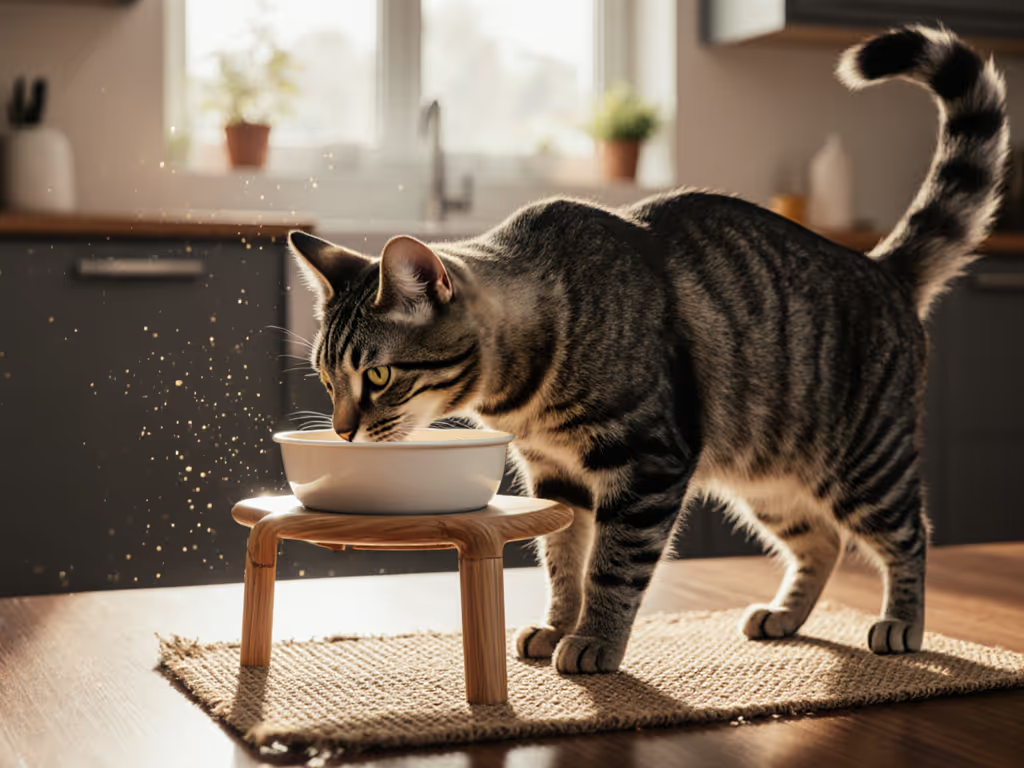
Switch to wide, shallow bowls or saucer-style dishes that allow whiskers to stay mostly away from the bowl edges.[4] The goal is to let your cat's face fit comfortably without the whiskers grazing the sides. Many cats show immediate improvement with a change to a wide, open plate, no training required.
Stainless steel or ceramic is preferable to plastic, which can trap odors and harbor biofilm in ridges.
Step 2: Map Your Feeding Space
Place the bowl in a location where your cat approaches head-on, not from an angle that twists the whiskers. For multi-cat households, create separate zones or use a time-blocking approach (cat A eats 7-7:30 a.m., cat B eats 7:45-8:15 a.m.). For layout blueprints and stress-reducing placement ideas, explore our feeding zone design guide. This removes the pressure of shared bowl space and gives each cat a calm, predictable routine.
Step 3: Adjust Bowl Placement and Height
Test different heights. Some cats do better with the bowl at chin level rather than on the floor, which can reduce whisker contact naturally. If you’re experimenting with elevation, this primer on why feeding posture matters can help you choose the right height. Experiment for a few days before deciding.
Step 4: Reduce Secondary Stressors
If a cat shows signs of whisker fatigue, look at the full feeding routine. Is the bowl in a high-traffic area? Is the cat being rushed? Is water nearby and whisker-friendly too? If bowls feel cramped, try a wide-basin option from our stainless, silent fountain picks to reduce whisker contact and boost hydration. Small changes to timing, location, or the water setup often resolve stress faster than bowl swaps alone.
Moving Forward: Fine-Tuning Your Feeding Routine
If you suspect whisker fatigue, start by ruling out other causes, such as dental issues, food sensitivities, or other medical concerns that should be evaluated separately. But if your cat is otherwise healthy and simply acting off at meals, a bowl change combined with a more intentional routine can produce noticeable improvement within a week or two.
Monitor for behavioral shifts: does your cat relax at the bowl? Do they finish meals without pacing? Are they less irritable before or after eating? These small wins indicate that the discomfort has lifted.
The deeper insight is this: feeding isn't just about nutrition. It's about building an environment where your cat can eat without sensory stress, where routines are predictable, and where fairness is baked into the design. When you align whisker-friendly gear with calm, repeatable routines, the whole household settles.
What does your cat's current feeding setup look like? Consider observing your cat's whisker position and behavior at the bowl for a few meals, and you might spot patterns that suggest a simple adjustment is overdue.
Related Articles