
Cat Hydration Tracking: What Your Data Reveals
By Hyejin Park • 23rd Feb
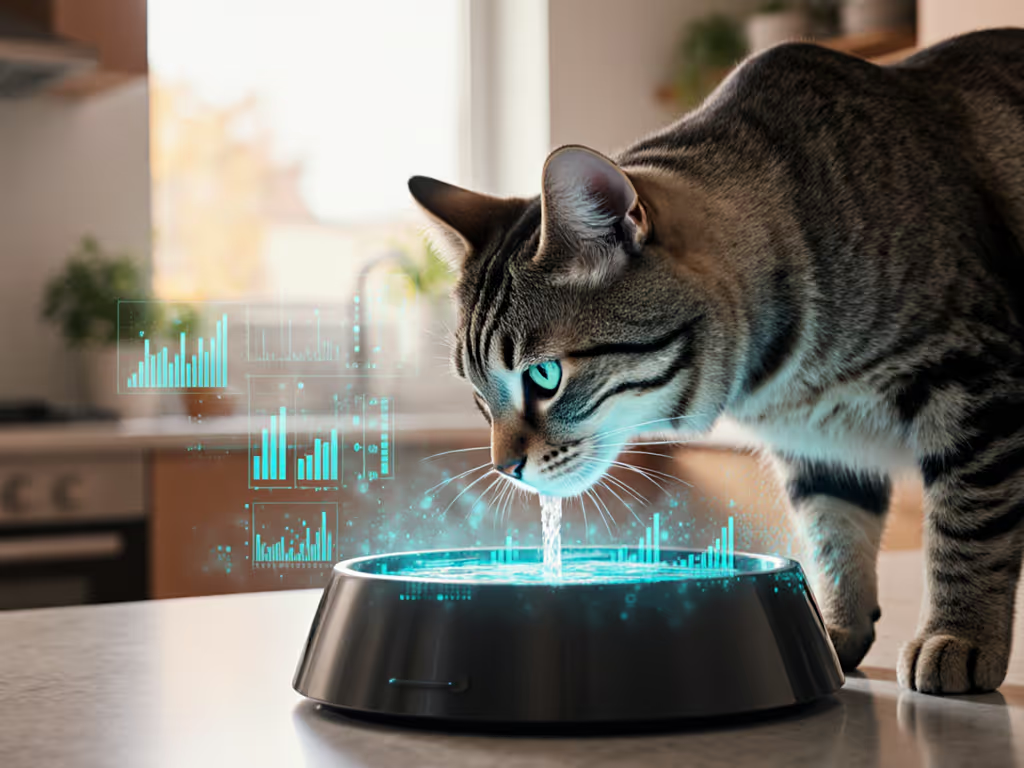
Cat hydration tracking and water consumption analysis have shifted from guesswork to measurable science, and the insights can change how you catch health problems early. If you've ever wondered whether your cat drinks enough, or suspected something was wrong but couldn't prove it to your vet, data gives you the clarity and confidence you need.
What Exactly Are You Measuring When You Track Hydration?
When we talk about hydration tracking, we're collecting one core metric: how much water your cat actually consumes in a 24-hour period. But that number alone isn't the story. The real value lies in the pattern (whether intake is climbing, dropping, sporadic, or clustered around specific times of day).
The most reliable biomarker veterinarians use to assess hydration is urine specific gravity (USG), essentially, how concentrated your cat's urine is. A concentrated urine reading often signals dehydration. By pairing daily water consumption data with urine observations, you build a two-point verification system that's far more predictive than either metric alone.
This is where hydration pattern monitoring becomes actionable. Instead of knowing your cat drank "some water today," you know whether today's intake matched their baseline, whether they're trending toward lower consumption (a red flag for early kidney or diabetes issues), or whether a sudden spike correlates with dietary changes.
How Do Different Tracking Methods Actually Work?
There are three main approaches, each with its own friction and accuracy profile.
Manual Measurement: The Baseline Method
The simplest path is a measuring cup and weight comparison. You fill a bowl with a known amount of water (say, 200 mL), place it in front of your cat, and measure how much remains after 24 hours. Subtract remainder from original amount. That's your consumption.
Time required: 2 minutes at fill and check.
Accuracy trade-offs: This method works, but it's vulnerable to evaporation, splashing outside the bowl, and your own human error. If your water sits for 24 hours in a warm, dry apartment, you'll lose liquid to air alone, which skews the number upward. In smaller spaces with multiple cats, tracking individual intake becomes nearly impossible.
The mess radius here is important: water splashed onto flooring, cabinets, or (if you're unlucky) adjacent electronics can turn a simple tracking routine into a cleanup tax.
Smart Devices with Weight Detection
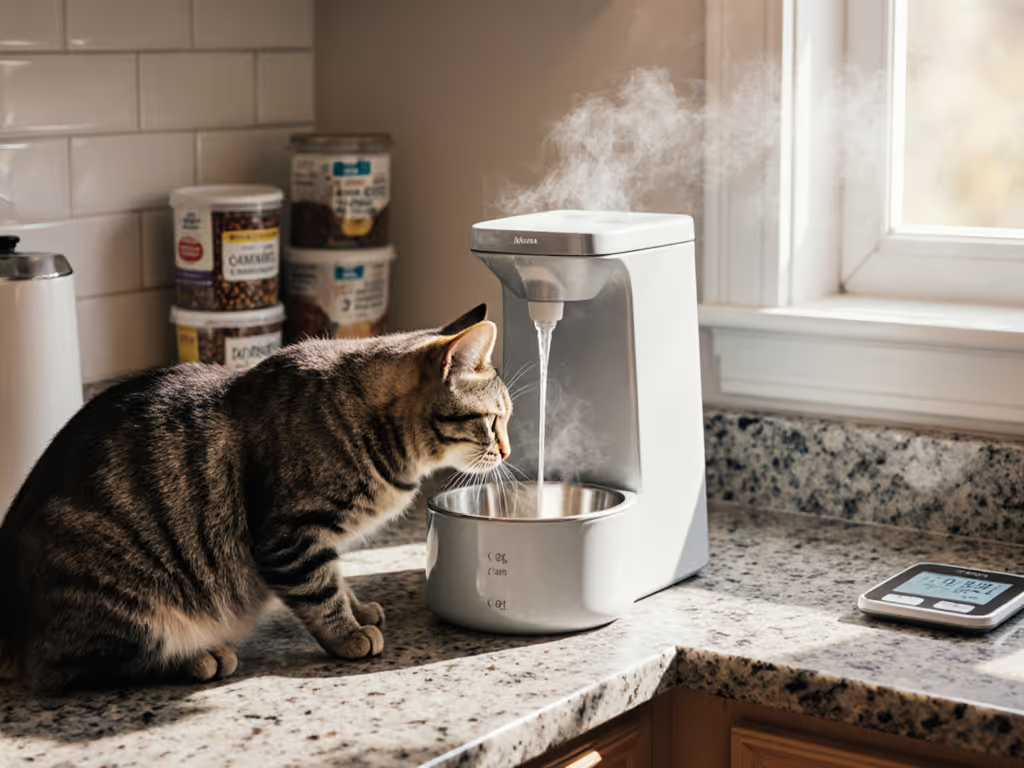
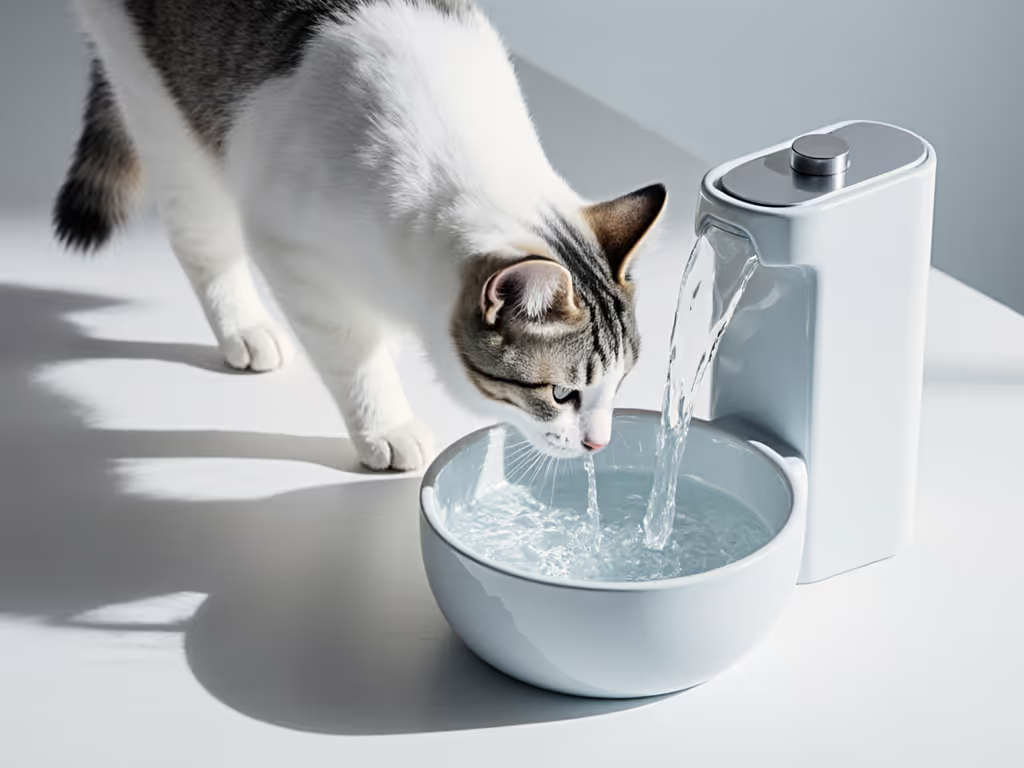
Water intake health indicators improve dramatically with smart water fountain data that uses continuous weight sensors. If you're selecting hardware, see our easy-clean, quiet water fountain picks to keep data precise with minimal maintenance. Instead of measuring water at the start and end of day, the system records the weight of the full tank at rest, factors in normal evaporation via calibration, and logs the net weight change at intervals (every hour, every 6 hours, or whenever motion is detected).
Tools and time required:
- Dishwasher-safe or easily wipeable fountain components (critical, see below).
- 5-minute setup and calibration.
- App check: ~1 minute to verify data synced and alerts are active.
What you gain is precision: the system isolates actual consumption from variables. No guesswork about evaporation. No dilution from spillage. The trade-off is that these systems have crevices, tubes, and small ports where biofilm can accumulate. If it's hard to clean, it won't stay clean, so check whether the pump, water level sensor, and any internal passages are accessible or, better yet, fully removable for a hot dishwasher cycle.
Activity-Based Monitoring
The newest tier combines feline hydration analytics with accelerometer and motion sensors embedded in collars or integrated into fountain lids. These systems detect when your cat approaches the bowl, classify the action as "drinking" vs. "investigating," and log the episode. Machine learning models trained on real cat behavior can achieve 98.9% accuracy in distinguishing drinking from, say, paw-batting or sniffing.
This is powerful because a cat that visits the bowl 8 times for 10-second sips tells a different health story than one that drinks deeply once per day, even if total volume is identical. For tech that logs meal patterns alongside hydration, compare smart feeders with health tracking.
Limitation: These systems require power, Wi-Fi, or Bluetooth sync. During network outages, data may buffer but won't transmit until connection restores. Always confirm there's a manual override or offline fallback.
What Does Your Cat's Hydration Data Actually Reveal?
The real value emerges when you look at changes, not single readings.
Diet Format Changes the Baseline
A key finding from hydration research: wet food dramatically increases water intake. To set realistic targets by life stage, review our hydration needs by age. Cats fed a diet with 70% or higher moisture content consume substantially more liquid overall compared to dry-kibble diets, and their urine becomes less concentrated, a marker of better hydration. If you switch your cat from dry to wet food and then pull hydration data, you should see a measurable climb in water consumption and a drop in urine specific gravity.
This matters because it tells you whether a dietary intervention is working, rather than relying on your intuition or the claims on a package.
Tracking Helps You Spot Early Warning Signs
A gradual drop in water intake over weeks can signal kidney disease, diabetes, or thyroid issues, all conditions where early detection changes outcomes. If your cat has or is at risk for CKD, specialized setups in our measured renal feeders guide can boost hydration safely. Conversely, a sharp spike in consumption might indicate a urinary tract infection, fever, or a thyroid disorder. Neither pattern is "normal," but without data, you might chalk it up to season, stress, or "my cat's just weird."
When you bring hydration logs to your vet's appointment, you've done half the diagnostic work already. Your vet can cross-reference intake trends with bloodwork and imaging much faster.
Behavioral Patterns Reveal Hidden Friction
If your data shows your cat drinks almost exclusively between 2 to 4 AM, that might suggest your primary water source is positioned too near the food bowl, or the bowl itself is uncomfortable. Cats naturally prefer water separated from food, an evolutionary carryover from hunting patterns. By tracking when your cat drinks most heavily, you can test repositioning or bowl geometry changes and then observe whether behavior normalizes.
Building a Clean, Sustainable Tracking Routine
Here's where the cleanability piece becomes non-negotiable. After years of ATP-swabbing every design on the market, comparing a pretty-but-fiddly fountain to a plain bowl, I learned that the "best" hydration tracker is the one you'll actually maintain without exhaustion.
A sustainable 10-minute hydration-tracking reset routine:
- Daily check (2 minutes): Open your app or write down the timestamp and water level. If manual, just peek at the bowl and note it mentally.
- Weekly deep clean (5 minutes): Remove all fountain components (pump, tubes, sensors) and run through the dishwasher on hot cycle, or hand-wash with a brush if not dishwasher-safe.
- Monthly calibration (3 minutes): If using a smart system, verify the weight baseline hasn't drifted and empty/refill the tank fully.
The catch: if the fountain has narrow tubes, glued-on parts, or ornamental crevices, that 5-minute clean balloons to 20 minutes of disassembly, scrubbing tiny ports, and reassembly. Biofilm grows faster than you'd expect in dark, hard-to-reach seams. Most people skip the clean, data gets unreliable, and the whole system stops working. Follow our science-backed bowl cleaning routine to prevent biofilm and keep readings reliable.
Choose materials and dishwasher racks carefully. Stainless steel and BPA-free plastics withstand hot cycles. Avoid fountains with glued or molded electronics that can't be removed. Every visible component should come apart with a gentle tug or one-handed twist (no tools, no fiddling).
How Do I Actually Use This Data with My Vet?
Bring your hydration trends to your next visit, especially if your cat is over 7 years old, has been diagnosed with kidney disease, diabetes, or urinary issues, or is on a therapeutic diet.
Tell your vet:
- Your cat's average daily water intake (in mL or your best estimate).
- Changes over the past month: trending up, down, or stable?
- Timing clusters: does your cat drink more in morning, evening, or spread evenly?
- Urine observations: darker/more concentrated in early morning? Any change in litter-box frequency?
Your vet may order a urinalysis to check USG and look for other markers (glucose, protein, bacteria) that correlate with your intake data. Together, you've built a clearer picture than either dataset alone.
Closing Thoughts: Data Is Only Useful If It's Sustainable
Track only what you'll actually review. If a system requires an app notification every time your cat laps, and you'll ignore 99% of them, it's clutter. If a fountain demands a 30-minute teardown monthly, you'll abandon it.
The best tracking system is one that fits into your existing routine (whether that's glancing at a simple bowl each morning, checking an app once weekly, or letting smart sensors log quietly in the background). Choose based on your apartment size, your technical comfort, and your willingness to keep the hardware clean.
Because the truth is: a simple, maintainable tracking method that you use consistently beats an elaborate system you dread cleaning and eventually ignore.
Further Exploration
Ready to move beyond guesswork? Start with your vet. Ask them what hydration baseline they'd like to see for your cat given their age and health history. Then pick a tracking method (manual, smart, or hybrid) that feels sustainable for your routine. Log data for 2 to 4 weeks, note any patterns, and share the results at your next check-in. You'll be amazed at what the numbers reveal.